What Interstate Trucking Regulations Actually Require
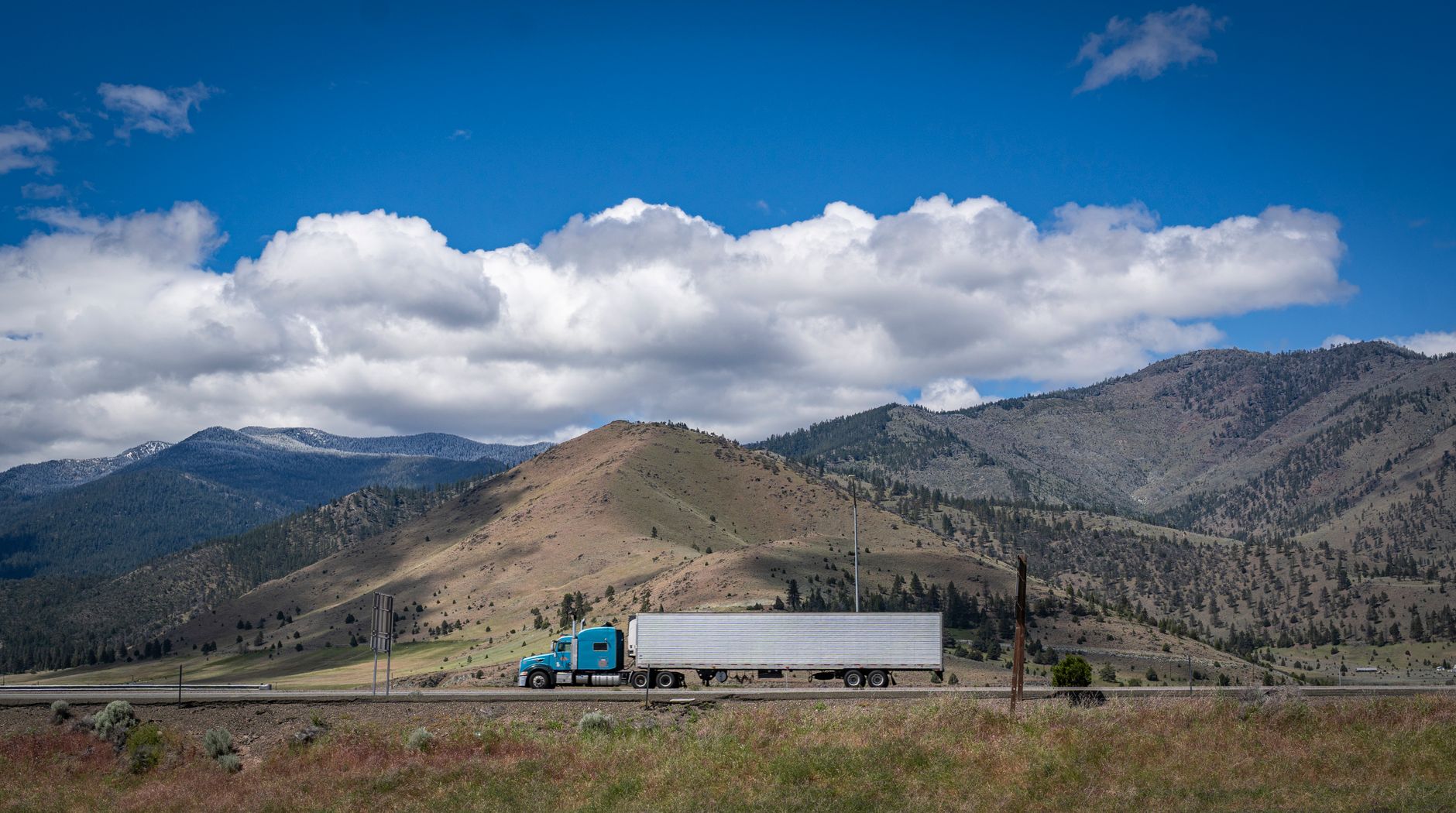
Quick answer: An interstate trucking company is any carrier that moves freight across state lines for compensation, and it must comply with federal rules set by the Federal Motor Carrier Safety Administration (FMCSA) covering driver licensing, hours of service, vehicle inspection, insurance minimums, and safety scoring. Shippers don't have to memorize these rules, but knowing the basics helps you vet a carrier, read a rate confirmation correctly, and spot red flags before freight is on the truck. The core pieces are USDOT registration, a valid CDL, hours-of-service logs, and minimum liability insurance — all enforced by FMCSA and, for insurance, tracked through the Federal Motor Carrier Safety Administration's registration system.
Key takeaways
- Any carrier hauling freight across state lines for hire needs a USDOT number and MC number issued through FMCSA's registration process.
- FMCSA requires interstate general freight carriers to hold at least $750,000 in public liability insurance, per FMCSA's financial responsibility regulations.
- Drivers are limited to 11 hours of driving within a 14-hour on-duty window, tracked through electronic logging devices (ELDs) under the FMCSA ELD mandate.
- FMCSA's Compliance, Safety, Accountability (CSA) program scores carriers on crash history, inspection violations, and hours-of-service compliance — a score shippers can check before booking.
What Makes a Trucking Company "Interstate" Instead of Intrastate?
A carrier is classified as interstate the moment it hauls freight that crosses a state line, even if the truck itself never leaves one state on a given trip. FMCSA's definition covers freight moving between states, freight moving from a foreign country through a U.S. state, or freight moving within one state as part of a longer interstate journey. A load that starts in Naperville and ends in Georgia is interstate. So is a load that starts and ends in Illinois if it's part of a larger shipment coming from another state.
Intrastate carriers, by contrast, only move freight within a single state's borders and answer primarily to that state's trucking regulations, not federal ones. The distinction matters because it determines which set of insurance minimums, licensing rules, and safety inspections apply. Illinois-based carriers running loads to the Southeast, Texas, or the West Coast — which is most of what an interstate trucking company in the Chicago area does — fall squarely under federal jurisdiction.
This is also why lane structure matters for compliance planning. A carrier running the same origin-destination pairs repeatedly, like Midwest-to-Southeast or I-80 westbound lanes, can build consistent hours-of-service planning around known drive times. A carrier that books random one-off lanes has less predictability and a higher chance of scrambling to stay within legal hours.
What Federal Registration Does a Carrier Actually Need?
Every interstate carrier needs a USDOT number and, in most cases, an MC number, both issued through FMCSA's Unified Registration System. The USDOT number identifies the company for safety monitoring and crash reporting. The MC number (short for "motor carrier" operating authority) is required for carriers that transport regulated commodities for hire across state lines.
Registration isn't a one-time formality. FMCSA requires carriers to keep information current, including:
- Update the biennial MCS-150 filing with current mileage and equipment counts.
- Maintain a registered process agent in each state where the carrier operates, as required by FMCSA.
- Keep insurance filings (Form BMC-91 or BMC-91X) active and on file with FMCSA.
- Renew operating authority status if the carrier goes inactive or changes structure.
A shipper checking a carrier's credentials can look up the USDOT number on FMCSA's public Safety and Fitness Electronic Records (SAFER) system. It shows registration status, insurance status, and inspection history at no cost. This is the fastest way to confirm a carrier is legally authorized to run the lane you need before freight ever gets booked — a step we go into in more depth in How to Vet a Freight Carrier and Avoid Hidden Costs.
How Many Hours Can a Trucker Legally Drive in a Day?
A commercial driver can drive a maximum of 11 hours after 10 consecutive hours off duty, within a 14-hour on-duty window, under FMCSA's hours-of-service rules. Once that 14-hour window closes, the driver must stop driving even if some of the 11 driving hours are unused. Drivers also face a 60-hour limit over 7 consecutive days, or 70 hours over 8 days, depending on the carrier's operating schedule.
Since December 2017, FMCSA has required most interstate carriers to track these hours using electronic logging devices (ELDs) instead of paper logs, which makes falsifying hours far harder to get away with. This is directly relevant to shippers because a driver who's run out of legal hours can't simply push through to make a delivery appointment — the truck has to stop, by law, regardless of how close it is to the dock.
Don't skip this: If a carrier promises a delivery time that would require a driver to exceed federal hours-of-service limits, that's not a scheduling win — it's a compliance violation waiting to happen, and FMCSA can place both the driver and carrier out of service for it.
FMCSA has also been testing changes to this framework. Current hours-of-service pilot programs explore letting drivers pause the 14-hour clock for a break, and adjustments to split sleeper berth rules that could give drivers more flexibility around long loading delays. None of these pilots have changed the standard rule yet — shippers should plan around the current 11-hour/14-hour framework until FMCSA finalizes anything.
What Insurance Must an Interstate Carrier Carry?
Interstate general freight carriers must maintain at least $750,000 in public liability insurance, per FMCSA's minimum financial responsibility requirements. Carriers hauling hazardous materials or other higher-risk commodities face higher minimums, which can reach into the millions of dollars depending on the cargo. This insurance covers bodily injury and property damage to third parties if a crash occurs — it does not automatically cover the value of the freight itself.
That's where cargo insurance comes in, and it's a separate policy carriers typically carry on top of the federal liability minimum. Shippers moving high-value freight should ask for a certificate of insurance showing both liability and cargo coverage limits before freight ships, not after something goes wrong. A reliable carrier should be able to produce that certificate the same day it's requested — it's a basic sign of an operation that has its paperwork in order.
| Coverage type | Who it protects | Federally required minimum |
|---|---|---|
| Public liability | Other drivers, property, the public | $750,000 for general freight (FMCSA) |
| Cargo insurance | The freight being hauled | Not federally mandated; carrier-specific |
| Hazmat liability | Public, in hazardous material incidents | Higher than general freight, set by FMCSA |
How Does FMCSA Score a Carrier's Safety Record?
FMCSA scores carriers through the Compliance, Safety, Accountability (CSA) program, which tracks violations across seven categories called BASICs — things like unsafe driving, hours-of-service compliance, and vehicle maintenance. Each roadside inspection and violation feeds into a carrier's score, and scores are visible to the public through FMCSA's SAFER system.
A rising CSA score in the hours-of-service or vehicle maintenance categories often signals real operational problems — rushed drivers, deferred maintenance, or poor dispatch practices. Shippers and brokers use these scores as part of carrier vetting, and insurance companies use them to set premiums. We covered how these federal scoring mechanics tie into freight pricing and delivery reliability in How FMCSA Rules Shape Your Freight Costs and Timeline.
Carriers also face DOT inspections, both roadside and scheduled, that check the physical condition of the truck and trailer. FMCSA requires an annual inspection at minimum, but carriers running in-house preventive maintenance programs typically inspect more often than the legal floor, catching brake wear or tire issues before they turn into a roadside violation or, worse, a breakdown mid-load.
What Should a Shipper Check Before Booking with an Interstate Carrier?
A shipper doesn't need to become a compliance expert, but a short verification pass before booking catches most problems early. Use this as a pre-booking checklist:
- Look up the carrier's USDOT number on FMCSA's SAFER system to confirm active authority.
- Request a current certificate of insurance showing liability and cargo coverage.
- Ask whether the carrier uses ELDs for hours-of-service tracking (nearly all legal interstate carriers do).
- Check the carrier's CSA scores for red flags in maintenance or hours-of-service categories.
- Confirm whether the same driver runs the load start to finish, or if it changes hands through relay or transload points.
- Ask how temperature is logged and monitored if the load is temperature-controlled.
That last point matters more than shippers often realize. A load that changes trucks or drivers partway through introduces more handling, more chances for delay, and — for reefer freight — more chances for a temperature excursion that isn't caught until delivery. PST Logistics runs every load with the same truck and same driver from pickup to delivery, with no cross-docking or transloading, specifically to remove that risk from the equation.
Interstate compliance isn't just a legal checkbox — it's the difference between freight that shows up clean and on time versus freight that gets stuck at a scale house or delayed by a driver who ran out of legal hours three states from the delivery dock. If you're shipping dry van or temperature-controlled truckload freight and want a carrier that keeps this paperwork tight and answers dispatch calls around the clock, reach out to PST Logistics in Naperville to get a lane quote.