How Fuel Surcharges Work in Freight and Why They Change
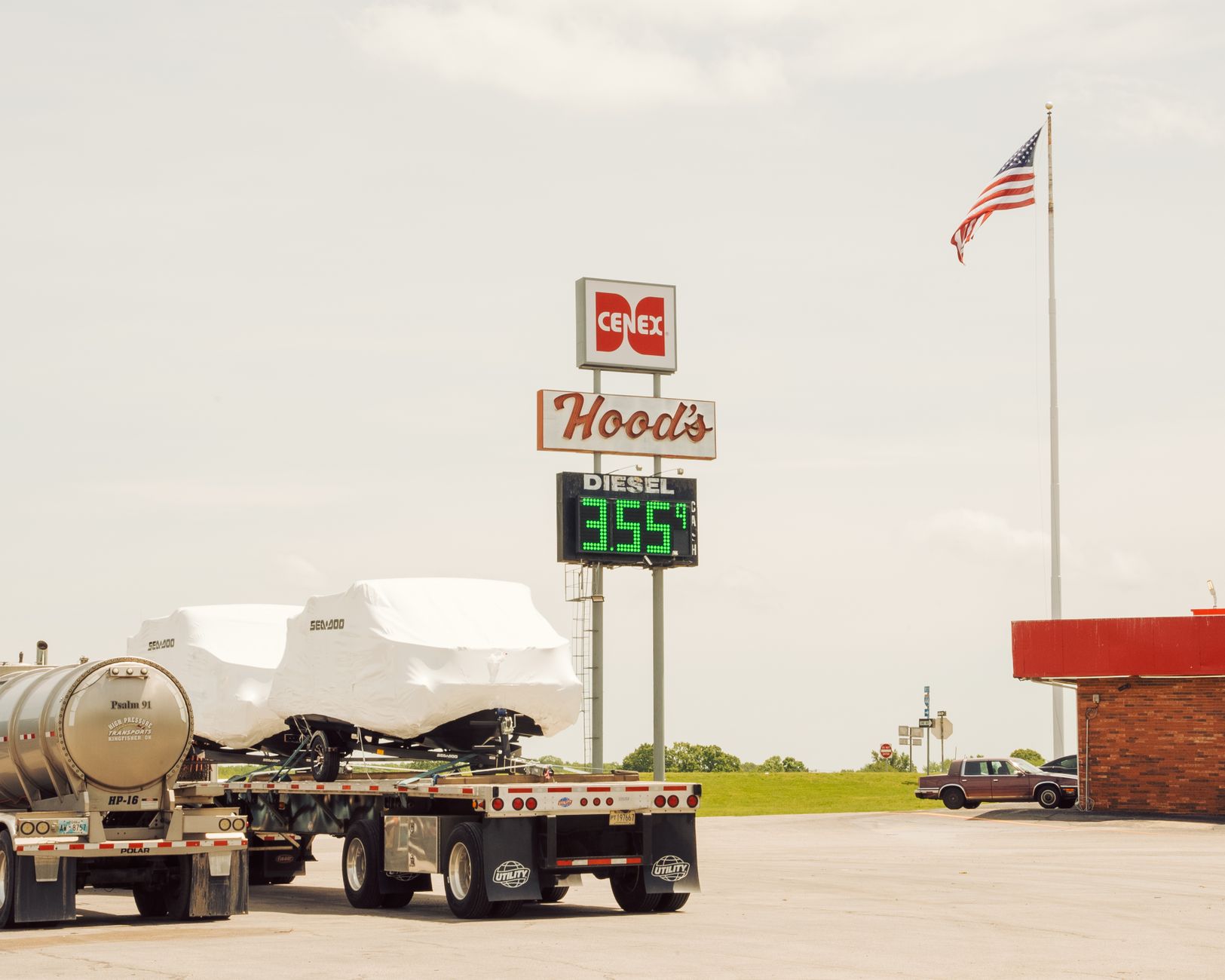
Quick answer: A fuel surcharge is a separate line item on your freight bill that adjusts for diesel price swings, calculated as a percentage of the linehaul rate tied to a published fuel index — usually the U.S. Energy Information Administration's weekly diesel price average. It rises and falls with diesel, not crude oil, because refining costs, regional supply, and taxes sit between the two. Shippers who understand the formula can budget more accurately and spot a surcharge that doesn't match the market.
Key takeaways
- Most carriers base their fuel surcharge (FSC) on the U.S. Energy Information Administration's weekly national or regional on-highway diesel price average, applied against a set baseline price.
- Diesel and crude oil prices don't move together — refining capacity, regional supply gaps, and state fuel taxes create a lag and a gap that can last weeks.
- Surcharge formulas, baselines, and update frequency vary by carrier, so two quotes with the same linehaul rate can carry very different total costs.
- Locking in a carrier relationship with transparent, published surcharge terms protects your freight budget more than chasing the lowest quoted rate.
What Is a Fuel Surcharge, and Why Do Carriers Charge One?
A fuel surcharge exists to pass diesel cost changes through to the shipper without rewriting the base freight rate every time fuel prices move. Trucking companies quote a linehaul rate based on distance, equipment, and market conditions, and that rate assumes a certain fuel cost. When diesel prices shift, the surcharge adjusts instead of the whole contract.
This separation protects both sides. A carrier locked into a flat rate for a year would take a loss every time diesel spiked, and a shipper locked into a rate that already baked in high fuel costs would overpay when prices dropped. The surcharge keeps the linehaul rate stable and lets fuel cost float separately, tied to a published number instead of a guess.
It is not a hidden fee. Reputable carriers disclose the surcharge formula upfront, and it should appear as its own line on every invoice. If a carrier can't explain how their number is calculated, that's a red flag worth asking about before you sign a rate confirmation — something we cover in more depth in how to vet a freight carrier and avoid hidden costs.
How Do Carriers Calculate a Fuel Surcharge?
Most carriers calculate the surcharge as a percentage of the linehaul rate that increases in steps as diesel prices rise above a set baseline. The most common method ties directly to the U.S. Energy Information Administration's (EIA) weekly average diesel price, published every Monday.
Here's a simplified version of how the math typically works:
- The carrier sets a baseline diesel price — for example, $2.50 per gallon — in the contract or rate agreement.
- Each week, the current EIA average diesel price is compared to that baseline.
- For every set increment above baseline (often $0.05 or $0.10), the surcharge percentage increases by a fixed step, commonly 1%.
- That percentage is applied to the linehaul portion of the rate — not the total invoice, and typically not accessorials like detention or layover.
So if diesel sits at $3.50 and the baseline is $2.50, and the carrier steps up 1% per $0.10 increase, that's a 10% swing added on top of baseline surcharge — applied to linehaul, not the whole bill.
The details vary carrier to carrier:
- Index source — some use the national EIA average, others use a regional EIA number, which matters if you're shipping in a high-tax state.
- Update frequency — weekly is standard, but some carriers lock the rate for a full week while others adjust mid-week during volatile periods.
- Baseline price — set at contract signing and rarely revisited, which means an old baseline can overstate or understate the true fuel cost years later.
- Miles counted — loaded miles only, or loaded plus empty return miles, changes the total surcharge dollars even at the same percentage.
Because of this variation, two carriers quoting the same $2,000 linehaul rate can land at noticeably different all-in prices once fuel surcharge is added. Always ask for the formula in writing, not just the current percentage.
Why Don't Diesel Prices Track Crude Oil Prices Exactly?
Diesel prices lag and diverge from crude oil prices because crude is only one input in a longer supply chain that includes refining, distribution, taxes, and regional demand. Shippers often see headlines about crude oil dropping and expect diesel — and their fuel surcharge — to fall just as fast. It usually doesn't, and there are specific reasons why.
Refining capacity and timing. Crude oil has to be refined into diesel before it reaches a truck stop, and refining runs on contracts and schedules that don't reset the moment crude prices move. A refinery that bought crude weeks ago at a higher price will keep pricing diesel off that cost until its inventory turns over.
Regional supply differences. Diesel prices vary by region based on local refining capacity, pipeline access, and distance from major terminals. A carrier running lanes through the Midwest may see different diesel pricing than one running the Gulf Coast, even in the same week, which is part of why the EIA publishes regional as well as national averages.
State and local taxes. Diesel tax rates differ significantly by state, and that tax is baked into the pump price the EIA reports — crude oil taxes don't work the same way, so this creates a permanent structural gap between the two prices, not just a temporary one.
Geopolitical and demand shocks. Events that spike crude oil prices, like conflict affecting a major oil-producing region, can push diesel prices up faster than they'll come back down. Diesel tends to be sticky on the way down even when it moves quickly on the way up.
Don't skip this: If you're budgeting freight costs off crude oil headlines, you're budgeting off the wrong number. Check the U.S. Energy Information Administration's weekly diesel price average directly — it's the actual index most carrier surcharges are built on.
Why Does Fuel Volatility Matter for Route and Timeline Planning?
Fuel volatility matters because it changes your total landed freight cost even when the linehaul rate you negotiated stays exactly the same. A shipper who locks a rate in January and doesn't revisit fuel surcharge assumptions by summer can be caught off guard by a materially different invoice, especially on long-haul lanes where fuel is a bigger share of total cost.
This is especially relevant right now. Global oil prices have shown sharp upward moves tied to geopolitical instability, and that kind of volatility tends to filter into diesel prices with a lag — meaning surcharges can keep climbing for weeks after a crude oil spike even if crude itself has already leveled off. Shippers planning multi-month contracts or seasonal freight volume should build in a fuel cost range, not a fixed number.
Longer lanes feel this more than short ones. A 150-mile local haul has minimal fuel exposure. A load moving from Naperville to the Texas triangle, or up the I-80 corridor westbound to the coast, covers enough miles that a 5-cent diesel price swing translates into real dollars on the invoice. If you're planning long distance trucking or interstate trucking capacity for the next two quarters, ask your carrier how they'd model a $0.30 diesel swing in either direction before you commit to volume.
How Should Shippers Budget for and Negotiate Fuel Surcharges?
Budget for fuel surcharges by building a range into your freight cost projections instead of a single number, and negotiate the formula — not just the current rate. The percentage a carrier quotes you today is a snapshot; the formula behind it is what actually determines your cost over the life of a contract.
Use this checklist when reviewing a carrier's fuel surcharge terms:
- Confirm which index the carrier uses — national or regional EIA diesel average — and ask for the published source.
- Ask for the current baseline diesel price and how often it's revisited or renegotiated.
- Get the step schedule in writing: how many cents of diesel movement trigger each percentage change.
- Clarify whether the surcharge applies to loaded miles only or loaded-plus-empty miles.
- Request historical surcharge data for the past 6–12 months to see how the formula behaved during real price swings.
- Ask how often the surcharge updates — weekly is standard, but confirm it isn't lagging a full pay period behind the index.
- Compare the all-in rate (linehaul plus surcharge) across quotes, not just the base linehaul number.
| Budgeting approach | What it captures | Risk |
|---|---|---|
| Fixed all-in rate quote | Simple to plan against | Carrier may build in a fuel cushion, costing you more in stable markets |
| Linehaul + published index formula | Transparent, adjusts with real market data | Requires tracking diesel prices weekly |
| Linehaul + flat percentage regardless of index | Predictable line item | Doesn't reflect true fuel cost, can overcharge or undercharge significantly |
For shippers running recurring freight, a dedicated freight arrangement with a consistent carrier often makes fuel surcharge tracking easier, since the formula and baseline stay fixed across every load rather than shifting quote to quote.
At PST Logistics, every rate quote for dry van and temperature-controlled truckload lanes comes with a clearly stated fuel surcharge formula, so shippers know exactly what's driving the number before freight moves. Same truck, same driver, and 24/7 dispatch that answers the phone means there's always someone who can walk you through how your invoice was calculated — not a call center reading from a script.
If you're planning freight volume for the coming quarter and want a straight answer on how fuel surcharges will affect your budget, contact PST Logistics for a rate quote on your lane.